
Smart Manufacturing and Predictive Maintenance Drive Growth in the Industrial Automation Market
The global industrial automation market is projected to reach US$ 326.48 billion by 2032.
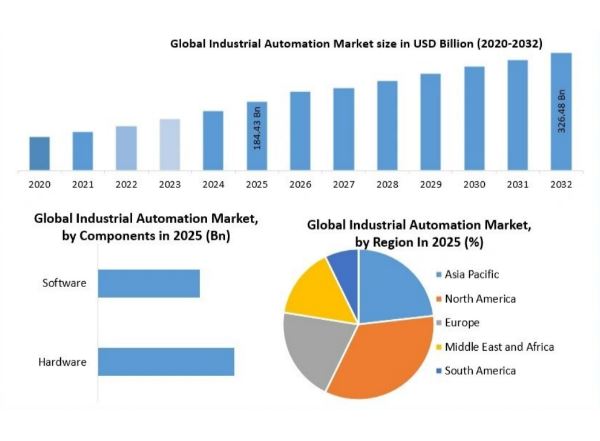
The market was valued at US$ 184.43 billion in 2025 and is expected to grow at a compound annual growth rate (CAGR) of 8.5% from 2025 to 2032, reaching nearly US$ 326.48 billion by 2032, according to Maximize Market Research.
Hardware Segment Maintains Market Leadership
By component, hardware accounted for the largest share of the market in 2025, capturing approximately 50–60%. Growth is driven by increasing demand for physical components in manufacturing automation systems. Industrial robots, programmable logic controllers (PLCs), human–machine interface (HMI) panels, and sensors form the backbone of automation infrastructure.

Investment in robotics and advanced control systems is expected to remain strong, particularly in the automotive, electronics, and energy utilities sectors.
Software and Services Gain Momentum
The software and services segment is experiencing accelerated adoption, fueled by smart manufacturing solutions, AI-driven process control, and real-time analytics platforms. This segment is projected to grow faster than hardware, as companies increasingly deploy predictive maintenance, remote monitoring, and data-driven optimization to improve operational efficiency.
Industrial Robotics at the Core of Innovation
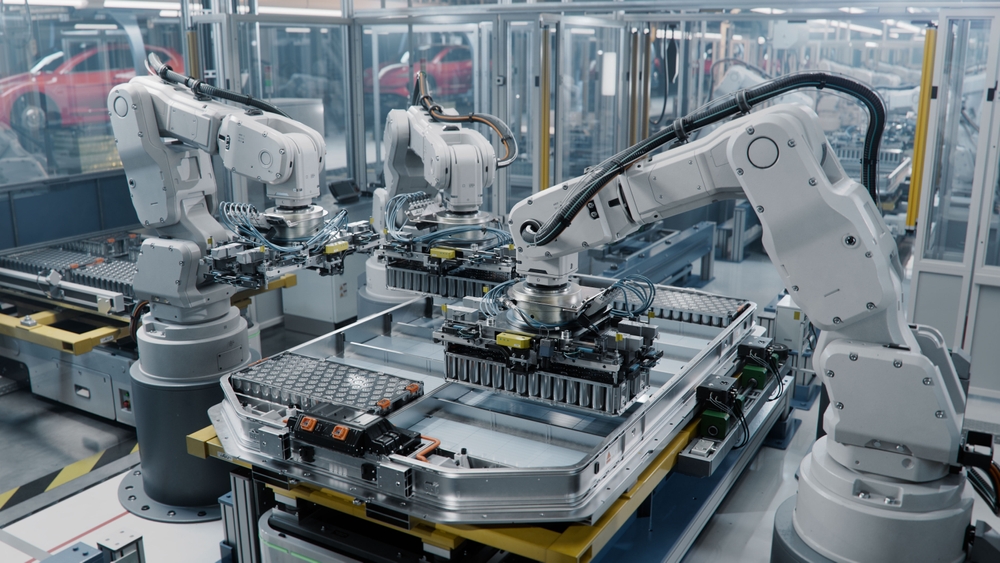
Industrial robots continue to be a key driver of automation growth. Collaborative robots (cobots) and AI-enabled systems are increasingly deployed in assembly, welding, and material handling applications.
Emerging markets in Asia-Pacific, particularly China, are contributing significantly to growth, with a reported 23% year-on-year increase in units shipped in 2022.
Predictive Maintenance and Functional Safety in Focus
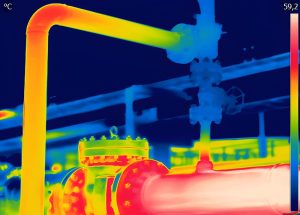
Predictive maintenance systems, AI-driven diagnostics, and industrial IoT platforms are transforming manufacturing operations by reducing unplanned downtime and improving equipment performance.
At the same time, safety automation solutions are becoming increasingly critical to prevent workplace accidents and ensure compliance with IEC and ISO functional safety standards.
Automotive Sector Leads End-Use Adoption
The automotive industry remains the largest end-user of industrial automation technologies due to its reliance on precision manufacturing, assembly line automation, and advanced quality control systems.
Automation enables higher productivity, reduced production errors, and improved operational efficiency, positioning the automotive sector as a primary driver of market expansion.
North America Leads, Europe and APAC Close Behind
North America currently leads the global industrial automation market, supported by strong adoption of advanced robotics, smart manufacturing technologies, and high exports of automation equipment.
Europe and the Asia-Pacific region follow, driven by IoT-enabled Industry 4.0 initiatives and government-backed industrial modernization programs.
Consolidation Reshapes the Competitive Landscape
Mergers, collaborations, and strategic partnerships are reshaping the industrial automation sector. Leading providers are integrating AI, IoT, and cloud-based capabilities into unified platforms, expanding product portfolios and delivering end-to-end smart manufacturing solutions.



Subscribe to the free Maintworld newsletter here!
Latest