
Accurate Flare Metering Is No Longer Optional
Emissions measurement is one of the oil and gas industry's biggest challenges.
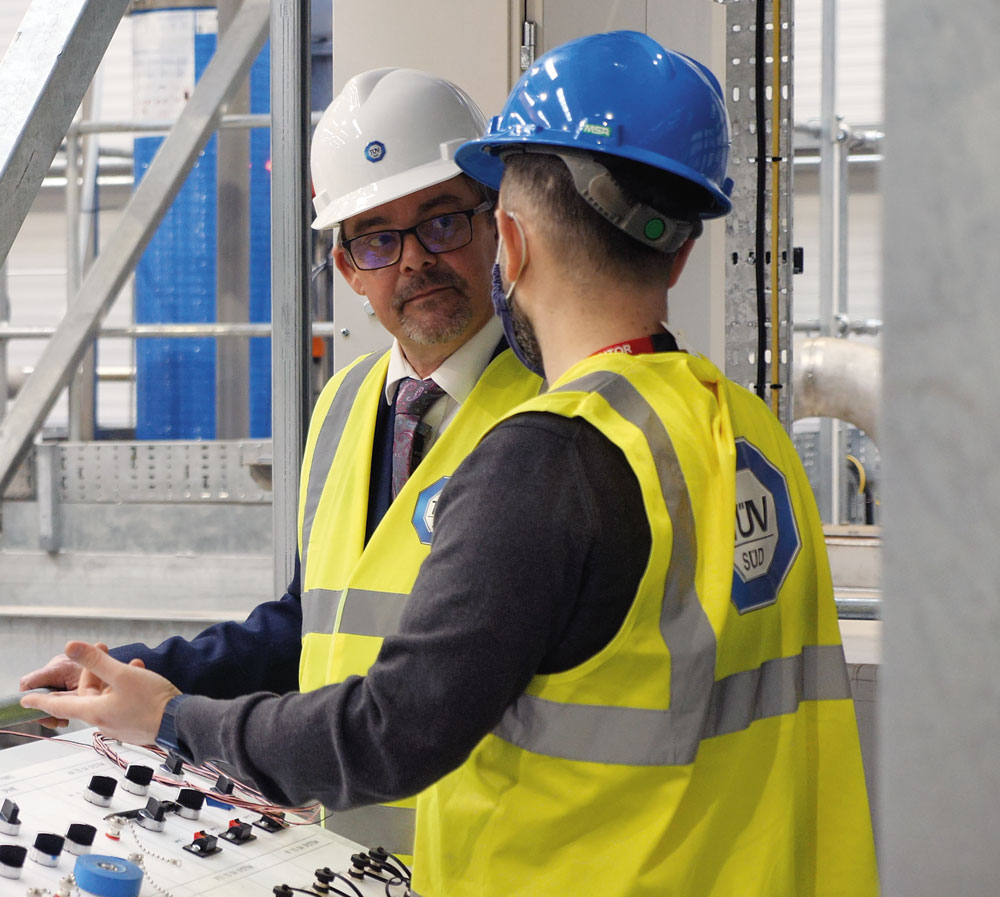
Colin Lightbody is a recognised expert in flare gas metering and emissions quantification, serving as Head of Flow Measurement Consultancy at TÜV SÜD National Engineering Laboratory. In 2023, he also became Deputy Chair of the British Standards Institution (BSI) Committee CPI/30/5 – Velocity and Mass Methods, which develops and maintains UK and international standards for industrial flow measurement.
For decades, gas flaring has been an accepted and necessary part of oil and gas operations. Its primary role has always been safety: providing a controlled way to dispose of hydrocarbons during abnormal or emergency situations.
Today, gas flaring is under growing scrutiny because of its environmental impact. As regulatory pressure intensifies and global targets such as the World Bank’s Zero Routine Flaring by 2030 initiative approach, accurate flare metering and emissions quantification have become critical for operators. In the EU, this pressure is driven primarily by the new EU Methane Regulation, which mandates high-standard measurement, reporting and verification of methane emissions, with similar requirements emerging internationally.
A recent webinar, “Challenges in Flare Gas Metering and Emissions Quantification,” hosted by TÜV SÜD—a global provider of testing, inspection and certification services—emphasised that the need for accurate emissions measurement will only continue to grow.
“Accurate flare metering and accurate emissions quantification has never been more important,” said Colin Lightbody, Head of Flow Measurement Consultancy at TÜV SÜD National Engineering Laboratory. “Yet achieving reliable flare measurement in real operating conditions is far from straightforward.”
Gas flaring is responsible for roughly 400 million tonnes of CO₂ emissions every year, along with significant methane releases (World Bank 2023; IEA 2023; Science 2022). Recent satellite-based studies show that methane emissions from flares may be up to five times higher than previously estimated, largely due to poor combustion efficiency and unlit flares.
Governments, operators and NGOs are now pushing for greater accuracy and transparency in emissions reporting, placing flare systems under closer examination than ever before. Lightbody noted that emissions reporting is often discussed in terms of methane, carbon dioxide or CO₂-equivalent figures, but the practical challenges behind those numbers are frequently underestimated.
Low flow velocities, installation effects and proprietary calculation methods all contribute to rising uncertainty. For operators using flare gas recovery systems, the challenge is even greater when regulations demand tight uncertainty limits.
“Is it possible to meet a 7.5 percent uncertainty if you have a flare gas recovery system and you are flowing at 0.1 metres per second? I would say no.”
In such cases, even operators actively reducing emissions may find themselves constrained by requirements that are difficult—or impossible—to meet in practice. “In these cases, the regulations are not viable, even though the operator is trying to do the right thing.”
For maintenance teams, this increases the importance of understanding how instrumentation performs across the full operating range, not just under design conditions.
Despite the growing focus on emissions, flaring remains first and foremost a safety-critical system. Maintenance professionals working offshore or in refineries know that flare systems must function reliably during abnormal and emergency conditions.
This dual role—safety system and emissions measurement point—creates a complex maintenance challenge. Flare gas systems consist of large-diameter pipework, knock-out drums, valves, ultrasonic flow meters and highly engineered flare tips. Each component influences not only availability and safety, but also measurement accuracy.
Routine maintenance can also introduce uncertainty. When ultrasonic transducers are removed and reinstalled, even small changes in positioning or alignment can affect repeatability, particularly at low flow rates. As regulatory expectations rise, maintenance strategies that were once considered conservative may now require re-evaluation.
Accurate flow measurement is only part of the emissions equation. Quantifying emissions also depends on how efficiently hydrocarbons are destroyed at the flare tip. Historically, the industry has relied on static assumptions, often assigning a combustion efficiency of 98 percent. Increasingly, this approach is being challenged.
“It’s not just as easy as saying my flare is 98% efficient,” Lightbody noted. Combustion efficiency and methane destruction rates vary depending on flare design, exit velocity, gas composition and environmental conditions such as wind. Assuming fixed performance values can oversimplify a complex and dynamic process, leading to emissions figures that reflect theory rather than reality.
Gas Flaring: From CO₂ Control to Methane Accountability
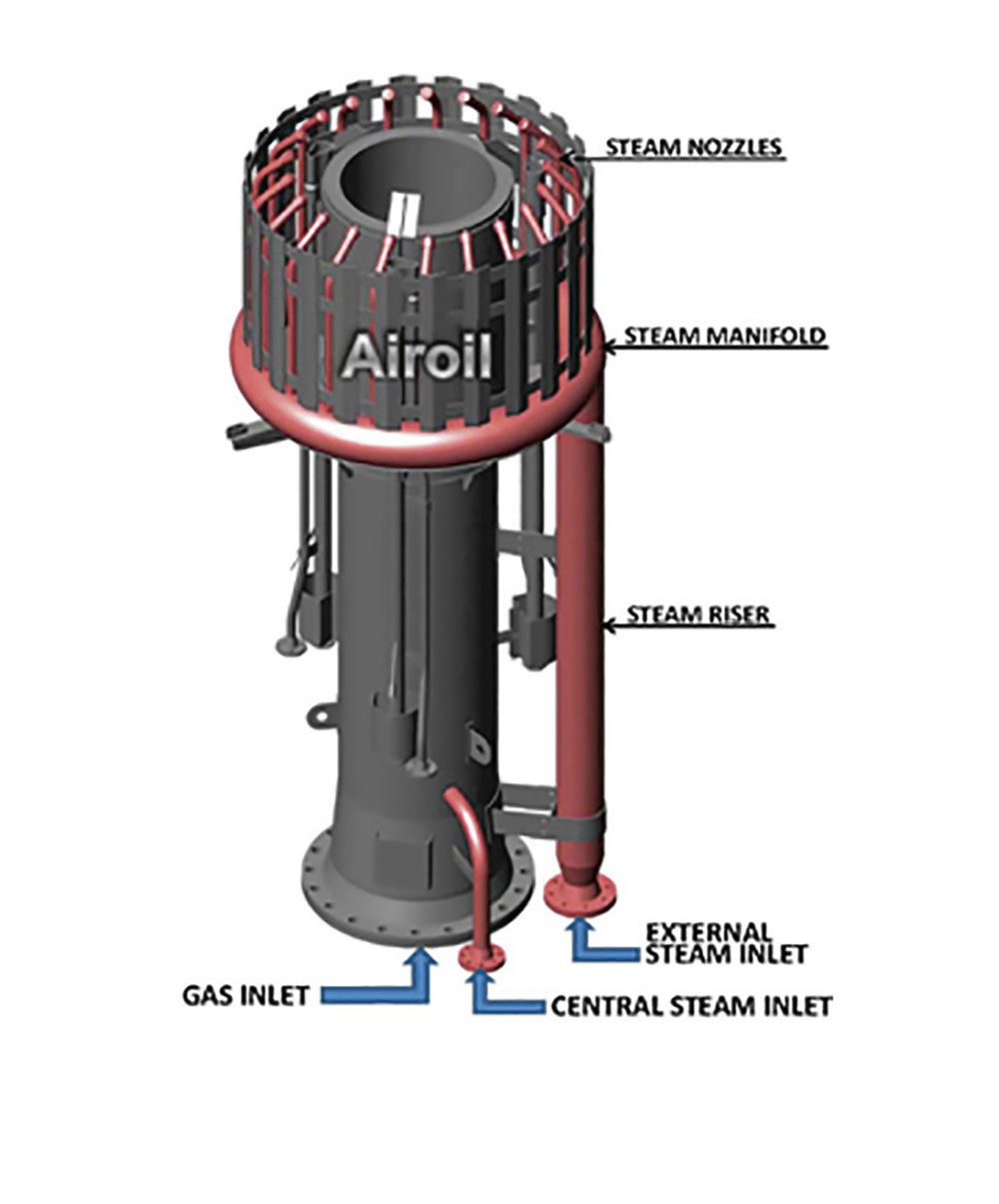
Gas flaring is the combustion of natural gas associated with oil extraction, primarily used to dispose of waste gas when capturing it is not economically viable or infrastructure is lacking.
While a safety measure, gas flaring is a significant source of CO2, methane, and toxic pollutants, impacting local health and climate.
The regulatory environment for gas flaring is continually evolving. Historically, most legislation has focused on CO₂ emissions. However, the spotlight is now on methane, which makes up about 90–95% of natural gas and has a global warming potential roughly 28 times that of CO₂ over 100 years (GWP100).
For maintenance professionals, this reinforces the need to view flaring systems as performance assets rather than passive infrastructure.
Despite the technical and regulatory challenges, the webinar made it clear that improvement is achievable. Better understanding of flow behaviour, more careful consideration of installation effects and more realistic combustion assumptions can all reduce uncertainty and improve emissions management.
From a maintenance perspective, condition-based approaches, improved documentation of as-found and as-left conditions, and closer collaboration between operations, instrumentation and environmental teams can all play a role.
TÜV SÜD offers a safety assessment service designed to evaluate the performance and compliance of industrial flare systems. According to Lightbody, this helps companies verify that their flares operate efficiently and meet international safety and environmental standards.
During the webinar’s Q&A session, attention turned to the ambition of achieving zero routine flaring by 2030. With only a few years remaining, the outlook was cautious.
“With four years to go, that might be a bit ambitious.”
Progress is expected to vary significantly by region and operator. Some countries and global companies are making strong advances, while others face structural, economic or regulatory barriers.
“There’ll be some countries and operators—like Norway or companies such as BP—who are really pushing for this.”
However, the expectation of a fully global outcome remains uncertain.
“Do I think that there’ll be zero routine flaring by 2030? Old cynic that I am—no.”
One clear takeaway from the webinar was the importance of continued learning and collaboration. As regulations evolve and expectations around emissions transparency increase, no single organisation has all the answers. Sharing real-world experience—particularly around measurement uncertainty, maintenance practices and system behaviour at low flows—is becoming increasingly valuable.
Industry workshops, technical forums and peer-to-peer exchanges provide opportunities to discuss challenges openly and learn from those facing similar issues in different operating environments.
For maintenance and reliability professionals, the message is clear: accurate flare metering is no longer a specialist concern or an environmental afterthought. It is now a core part of asset integrity, regulatory compliance and operational credibility. In a data-driven industry, the ability to measure accurately has become inseparable from the ability to maintain effectively.
Flare Emissions Measurement Challenges
• Meter Uncertainty: Regulators often require a meter uncertainty of less than 7.5%, sometimes even as low as 5%. Achieving this level of accuracy is challenging, especially in large diameter pipelines.
• Installation Effects: The presence of bends, T-pieces, and other complex piping geometries can introduce significant biases in measurement. Ensuring a fully developed symmetrical flow profile is crucial but difficult to achieve in practice.
• Dynamic Conditions: Flare systems operate under constantly changing conditions, including fluctuating flow rates, varying gas properties and environmental factors like wind speed and direction. This dynamic environment complicates the measurement process.
• Proprietary Calculations: Many flare gas meters use proprietary calculations for flow rate determination. While these are the result of extensive research, they are difficult for regulators to independently verify.
Innovative Approaches to Emissions Quantification
• Real-Time Data Analysis: Utilising real-time data analysis to monitor and adjust flare operations can optimise CE and DRE values. For instance, increasing the flow rate on windy days can improve combustion efficiency.
• CFD Modelling: Computational Fluid Dynamics (CFD) modelling can simulate various operating scenarios, providing valuable insights into potential biases and inefficiencies. This helps in generating correction factors to improve measurement accuracy.
• Transparent Calculations: Using established and verifiable calculations from recognised standards (e.g., ISO, API) for emissions quantification ensures transparency and traceability, making it easier for regulators to verify reported figures.
• Integrated Systems: Combining CFD models, live weather data, and traceable calculations into an integrated system allows for real-time optimisation of flare operations, reducing emissions and improving safety.
TÜV SÜD
TÜV SÜD offers a safety-assessment service designed to evaluate the performance and compliance of industrial flare systems. It helps companies verify that their flares operate efficiently and meet international safety and environmental standards.
Text: Nina Garlo-Melkas Photos: TÜV SÜD, SHUTTERSTOCK
Source:
World Bank. (2023). Global Gas Flaring Tracker Report 2023.
Johnson, M. R., et al. (2022). Methane emissions from flares: unlit and inefficient flares are a major source. Science.