Predictive Maintenance Market Set To Reach $16.74 Billion By 2031
Monitoring infrastructure is set to dominate the predictive maintenance market in 2026, driven by the growing role of sensors and sensing technologies.
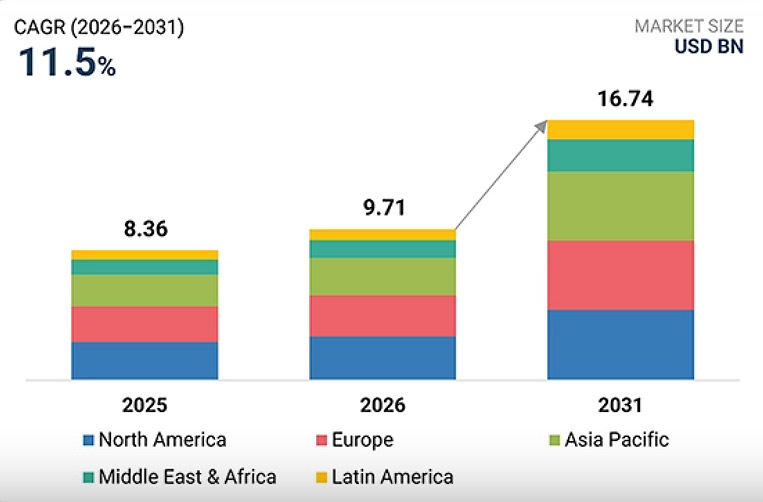
The global predictive maintenance market is expected to grow from USD 9.71 billion in 2026 to USD 16.74 billion by 2031, according to a report by MarketsandMarkets. This represents a compound annual growth rate (CAGR) of 11.5 percent.
Growth is driven by increasing demand to reduce equipment downtime, optimise maintenance schedules and improve operational efficiency through data-driven insights.

Sensors And IoT Drive Market Growth
Monitoring infrastructure is expected to account for the largest share of the market in 2026, with sensors and sensing devices playing a central role. Their integration with industrial IoT platforms and asset management systems enables automated data collection and improved visibility into equipment performance.
At the same time, edge computing and edge AI are projected to be the fastest-growing segment, with a growth rate of 14.2 percent during the forecast period.
Visual Inspection Technologies On The Rise
Among monitoring techniques, visual inspection is expected to see the fastest growth. The adoption of computer vision, drones and AI-based inspection systems is expanding rapidly in industrial environments.
These technologies enable automated inspection of equipment and infrastructure without direct human intervention, helping to identify defects such as corrosion, leaks and structural damage that may not be detected by traditional sensors.
Manufacturing Leads Adoption
The manufacturing sector is projected to hold the largest share of the predictive maintenance market, accounting for 21.2 percent in 2026. The sector’s asset-intensive nature and focus on efficiency continue to drive adoption of advanced maintenance solutions.
North America Remains Largest Market
According to the report, North America is expected to dominate the market with a 29 percent share in 2026. The region benefits from early adoption of industrial IoT, artificial intelligence and advanced analytics, as well as mature cloud infrastructure and strong technology awareness.



Subscribe to the free Maintworld newsletter here!

Latest