Future making and systems thinking in Maintenance and Asset Management
Maintenance and asset management are facing a growing number of simultaneous challenges.
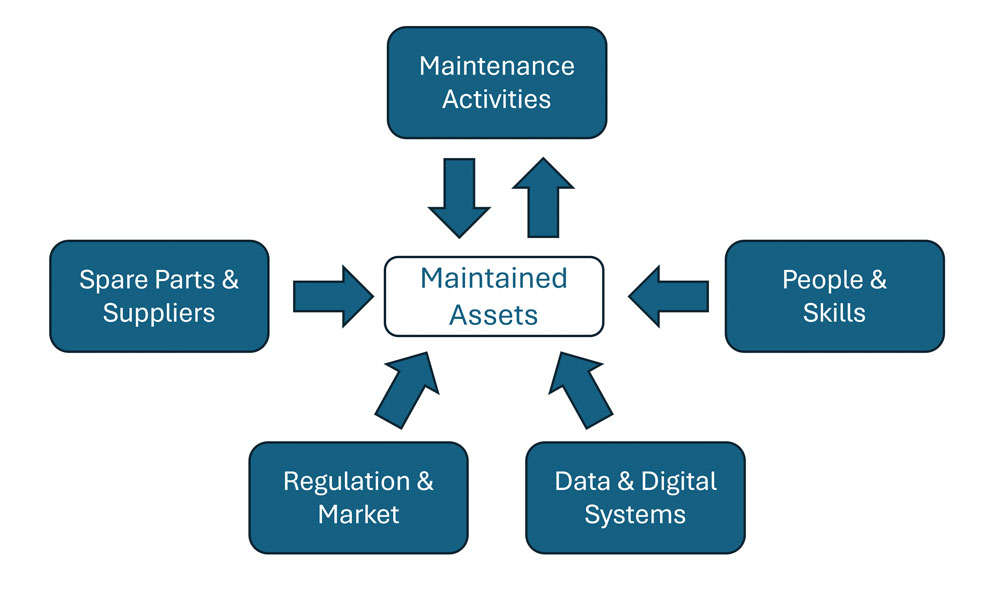
Figure 1: Maintenance and Asset Management as a System
Many industrial assets are operating beyond their original design life. Supply chains have become less predictable, spare parts availability is less reliable, and access to experienced maintenance personnel is increasingly constrained. At the same time, regulatory requirements related to safety, emissions, and reporting continue to expand.
Digital technologies are now deeply embedded in assets and maintenance processes, creating new opportunities but also new dependencies between physical equipment, software, and data.
These developments change the role of maintenance. Decisions that were once mainly about short-term availability or cost now have long-term effects on asset reliability, compliance, resilience, and lifecycle performance. Maintenance choices influence how well organizations can adapt to changing operating conditions over many years.
Traditional maintenance approaches work well in stable environments with clear cause-and-effect relationships. However, as assets become more interconnected and operating contexts more dynamic, linear planning and optimization become less effective.
This article examines how future making and systems thinking can support maintenance and asset management in this environment. It focuses on how these perspectives help organizations understand long-term consequences, manage interdependencies, and make more robust decisions under uncertainty.
Maintenance always shapes the future. Every maintenance decision influences the future performance of assets.
Deferring maintenance creates one type of future. Investing in condition monitoring creates another. Choosing modular upgrades instead of full replacements creates yet another. Over time, these decisions affect safety, availability, costs, emissions, and resource use.
Future making starts by making this influence explicit. It encourages maintenance teams to look beyond immediate issues and consider how today’s actions shape future options.
Instead of focusing only on questions such as “How do we fix this problem?” or “How do we reduce downtime?”, future making adds broader questions. What kind of asset system are we building over time? Which dependencies are we creating? Which options are we preserving, and which are we limiting?
This perspective is especially important in industries where assets remain in use for decades. During these lifecycles, markets change, regulations evolve, technologies mature, and operating assumptions shift. Maintenance decisions connect current conditions with future realities.
Many maintenance methods are based on linear thinking, which can limit how effectively organizations address complex and evolving operational challenges.
A fault has a clear cause. An intervention produces a predictable result. Performance can be optimized based on historical data. In stable environments, this approach remains effective. However, many maintenance challenges today are no longer linear.
Changes in operating conditions can trigger unexpected failure patterns. Software updates can affect mechanical behaviour. Measures taken to reduce short-term costs can increase long-term risk exposure. Improvements in one part of the system can create bottlenecks in another.
Systems thinking helps address this complexity.
It shifts attention from individual components to relationships between elements. It highlights feedback loops, delays, and interactions over time. This helps explain why well-intended maintenance actions sometimes produce unintended results.
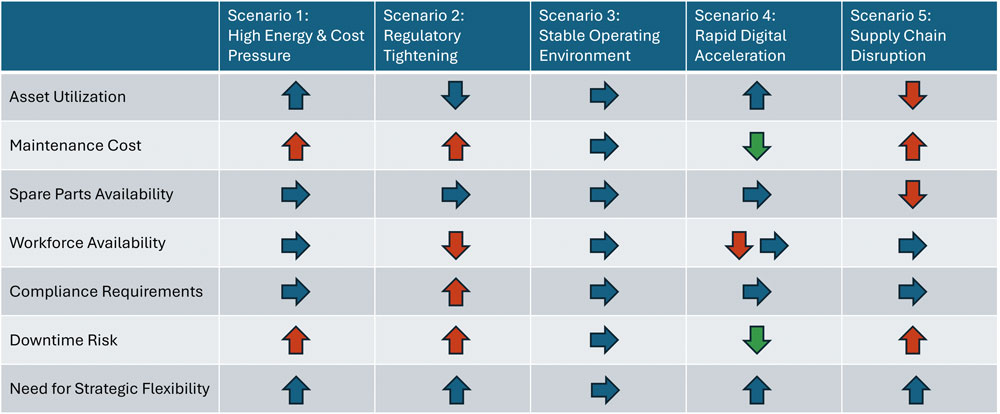
Figure 2: Illustrative impacts of alternative operating futures on key maintenance variables
From a systems perspective, an asset always functions as part of a larger interconnected system rather than in isolation.
It is part of an operational system, which is part of a business system, which is embedded in a wider economic, regulatory, and environmental context. Changes in energy prices, climate regulation, workforce availability, or supplier markets can directly affect maintenance strategies.
This broader view helps explain why some improvement initiatives fail. Optimizing a single asset or performance indicator without considering the surrounding system often shifts problems rather than solving them.
For example, increasing asset utilization may improve short-term efficiency. At the same time, it can accelerate wear, increase maintenance backlog, and reduce the ability to respond to disruptions. Systems thinking makes these trade-offs visible earlier, when corrective action is still possible.
Systems thinking is not only about understanding current interactions. It also helps organizations anticipate how the wider system may evolve over time.
Assets that are technically reliable today may become constrained by future regulatory requirements, new technological standards, or changing societal expectations. For example, equipment designed without consideration for stricter emissions limits, digital interoperability standards, or increased reporting obligations may require costly retrofits later.
A broader system perspective therefore supports future readiness. When planning asset upgrades, maintenance intervals, or digital integrations, organizations can consider how technological developments, regulatory trends, and market shifts may affect the relevance and performance of assets over their remaining lifetime.
This does not require precise prediction. It requires awareness of external dynamics and their potential impact on asset strategy. Systems thinking provides a structured way to connect maintenance decisions with these larger developments.
Future making is not about predicting the future accurately, but about preparing effectively for the possibilities ahead.
In complex and interconnected systems, precise prediction is rarely possible. Instead, future making focuses on preparedness and adaptability.
For maintenance and asset management, this often involves working with multiple plausible future scenarios. These may include different demand levels, regulatory conditions, technology adoption rates, or workforce availability. Maintenance strategies can then be tested against these scenarios.
The objective is not to select one expected future, but to identify actions that perform reasonably well across several possible futures. This supports more robust decisions and reduces vulnerability to unexpected change.
Practical implications for maintenance organizations: when applied in practice, future making and systems thinking lead to several concrete changes.
When applied in practice, future making and systems thinking lead maintenance organizations to implement several concrete changes.
Maintenance planning becomes more closely linked to long-term business and asset strategies. Data is used not only for performance optimization, but also to detect emerging patterns and early signals of change. Collaboration across functions becomes more important, as system effects often cross organizational boundaries.
The role of maintenance professionals also evolves. In addition to executing plans, they contribute to shaping asset systems that remain reliable and adaptable over time.
These perspectives do not replace established maintenance methods. Reliability engineering, condition monitoring, and asset performance management remain essential. Systems thinking and future making complement these tools by providing a broader decision context.
Maintenance has always involved uncertainty, but what has changed is the scale, speed, and interconnectedness of today’s challenges.
Future making and systems thinking provide structured ways to engage with this reality. They help organizations move from reactive responses toward more deliberate, long-term decision-making.
As assets operate under changing assumptions, the ability to understand system behaviour and consider future consequences becomes an increasingly important capability for maintenance and asset management.
About the author
Michael Hanf is a strategy and sustainability advisor based in Helsinki. He works at the intersection of systems thinking, foresight, and industrial transformation, supporting organizations in strengthening long-term resilience and strategic decision-making.
Text: Michael Hanf Figures: Michael Hanf’s archive
Soil Microbes and Forest Industry Side Streams: The Hidden Maintenance System for Global Food Security