
Engineering the World’s First Artificial Energy Island
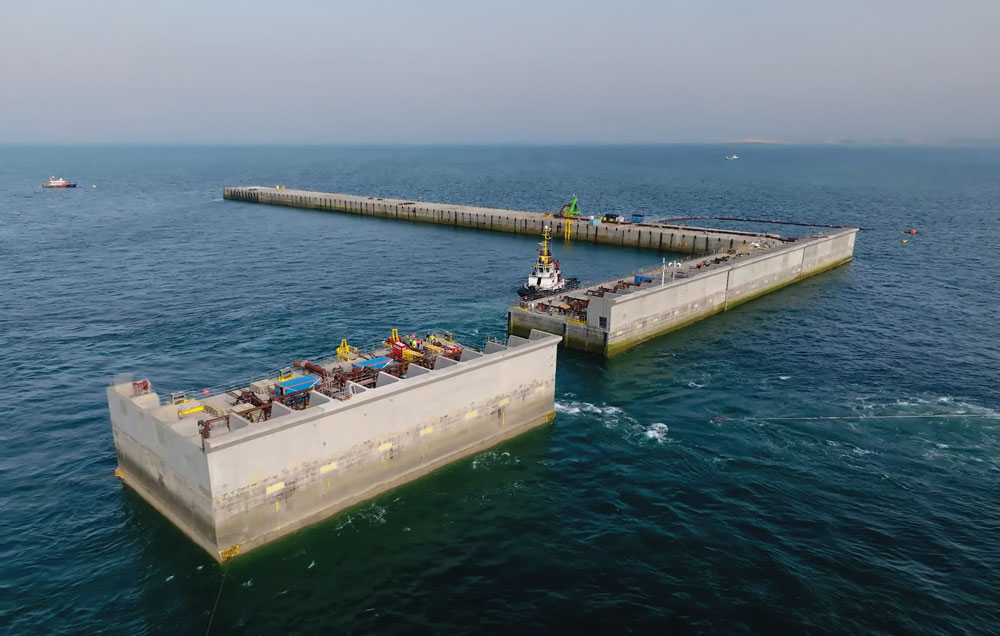
The Princess Elisabeth Energy Island reached its first major milestone in January when all 23 of its concrete caissons were completed.
The Princess Elisabeth Energy Island
In 2022, the Belgian publicly-owned transmission system operator Elia Group announced plans to build what it called "the world's first artificial energy island", connecting up to several gigawatts of offshore wind capacity.
"By quadrupling our offshore wind capacity by 2040, we will strengthen our energy independence, reduce our energy bills and cut carbon emissions," said Belgian Energy Minister Tinne Van der Straeten, presenting the Elia plan.
Construction of the island started in 2023.
A New Model for Large-Scale Offshore Grid Integration: Located approximately 45 kilometres off the Belgian coast in the North Sea, the Princess Elisabeth Energy Island represents a pioneering approach to integrating offshore energy at scale.
The main construction work will be carried out by the TM Edison consortium, a joint venture between the Belgian marine engineering companies DEME Group and Jan De Nul Group. The consortium will be responsible for dredging, seabed preparation and the construction and installation of the concrete revetments on the island.
Other partners include engineering companies such as Iv, HSM Offshore Energy and Smulders, which will support the design and integration of the island's high-voltage infrastructure, and materials supplier Holcim Belgium.
The structure is engineered to withstand the demanding environmental conditions of the North Sea, including high waves, storm surges and long-term marine exposure.
Princess Elisabeth Energy Island reached its first major milestone in January 2026, when all 23 massive concrete caissons were completed and made ready for installation.
“The scope was significantly revised due to rising costs.”
"The caissons are now at the Scaldia terminal for final finishing works," said DEME in its press release.
This spring, offshore installation of the remaining caissons resumes in the North Sea, alongside continued works to prepare the island’s interior.
At the heart of the project is a civil engineering solution based on 23 prefabricated concrete caissons. Each caisson measures roughly 58 metres in length, 28 metres in width and up to 30 metres in height, with individual weights reaching approximately 22,000 tonnes.
Once positioned, the caissons are submerged in a prepared seabed footprint and installed in a circular configuration to form the island’s outer perimeter. The caissons are filled with water to sink them in a stable and controlled manner and will form the island’s outer perimeter.
The next phase involves reinforcing the caissons with rubble to protect against summer storms, filling them with sand and preparing for the placement of the next unit.
Nature-Inclusive Engineering at Sea: The project incorporates nature-inclusive design principles as an integral part of its engineering concept.
The caisson walls and surrounding rock structures are specifically designed to enhance marine biodiversity, creating habitats for shellfish and other marine organisms.
Elia Group has emphasised that these measures aim to compensate for the ecological impact of constructing an artificial island in the North Sea.
The upper sections of the structure are planned to serve as nesting sites for seabirds, while the submerged components are intended to support oyster reefs and other underwater ecosystems.
Construction of the high-voltage alternating current (HVAC) systems began in June 2025 at HSM Offshore Energy’s shipyard in Schiedam the Netherlands, marking a key step forward in multi-yard project execution.
The contract for the HVAC stations was awarded by HSI Pemac, a Belgian-Dutch consortium comprising HSM Offshore Energy, Smulders and IV.
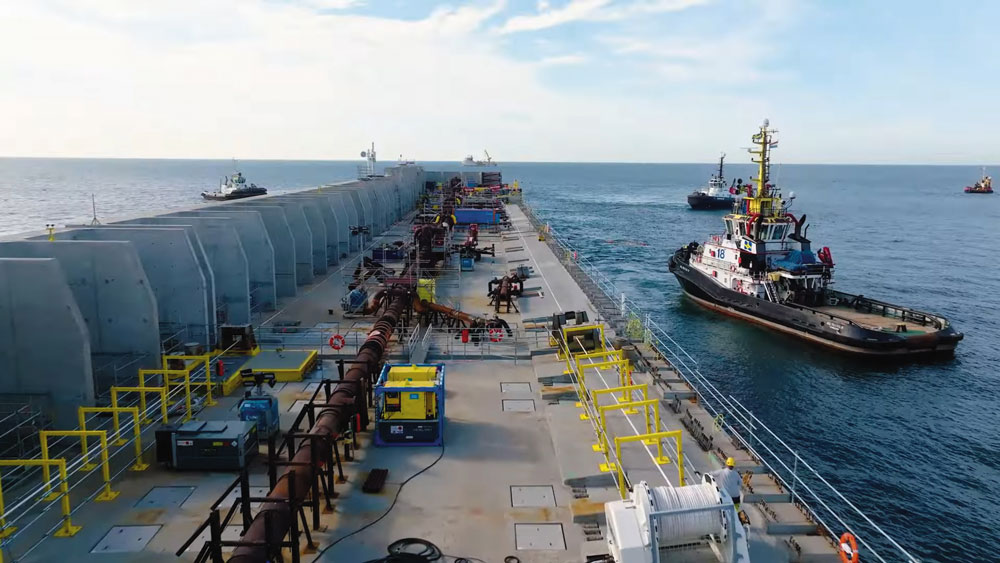
Each caisson measures approximately 58 metres in length, 28 metres in width and up to 30 metres in height, with an individual weight of around 22,000 tonnes.
Detailed 3D modelling and other design work is carried out at IV's offices in Papendrecht, while prefabrication takes place at Smulders' Belgian facilities and HSM's Schiedam plant.
Final assembly takes place in Schiedam and Vlissingen.
In addition to the electrical infrastructure, the island will include a small harbour and a helipad to support maintenance operations. These facilities will allow crew transfer vessels and helicopters to access the offshore hub efficiently, minimising downtime and operational risks.
Princess Elisabeth Energy Island was originally conceived as a hybrid offshore grid platform combining both high-voltage alternating current (HVAC) and high-voltage direct current (HVDC) systems, before the project evolved toward a stronger AC focus.
The HVAC infrastructure would collect electricity from multiple wind farms via subsea export cables, while HVDC converter stations would enable efficient long-distance transmission and the development of new international interconnectors — including a planned second link between Belgium and the United Kingdom.
However, in the summer of 2025, the Belgian government announced that the scope of the project would be significantly revised due to rapidly rising costs.
Cost Escalation Forces Project Revision: Initially estimated at just over €2 billion in 2021, total project costs had risen to approximately €7 billion, driven largely by escalating prices for high-voltage direct current (HVDC) systems and installation works.
As a result, the federal government cancelled the second phase — which would have included a third wind farm connection and a direct HVDC link to the UK. The cut is expected to bring savings of around €3 billion.
While construction of the island itself and its AC infrastructure continues, discussions with UK partners regarding a future second interconnector remain ongoing.
Strong EU Backing for the Project: The Princess Elisabeth Energy Island has secured significant European financial support as part of the EU’s wider green transition agenda. In 2024, the European Investment Bank (EIB) signed a €650 million Green Credit agreement with Elia Group to help finance construction of the offshore hub and its associated grid infrastructure.
The project has also received €100 million from the NextGenerationEU recovery fund and benefits from backing under the EU’s REPowerEU initiative, which aims to strengthen Europe’s energy resilience and accelerate the shift away from fossil fuels.
Despite the scope reduction, the Princess Elisabeth Energy Island remains a landmark project in offshore grid development, showcasing innovation under pressure.
With construction progressing in phases, the Princess Elisabeth Energy Island is widely viewed as a prototype for future offshore energy hubs in Europe.
As offshore wind capacity continues to expand, the island model offers a scalable solution for grid consolidation, cross-border energy exchange and system resilience in increasingly complex renewable energy networks.
The project now serves as both a technological prototype and a case study in the financial and supply-chain pressures facing large-scale energy infrastructure. As construction progresses, its success will likely influence how future offshore hubs are engineered, financed and phased across Europe.
Operations Scheduled to Begin in the 2030s: The island itself is due to be completed by 2027, after which construction of the wind turbines can begin, with the island expected to be operational by the 2030s.
Once completed, the modules, including the substations and the power plant unit, will support the supply of at least 2.1 GW of wind power to the continent.
In its first phase of operation, it will collect electricity from two new wind farms located in Belgium's second offshore wind zone and will enable this energy to be connected to the country's onshore grid.
Text: Vaula Aunola
Photos: Elia, HSM Offshore Energy