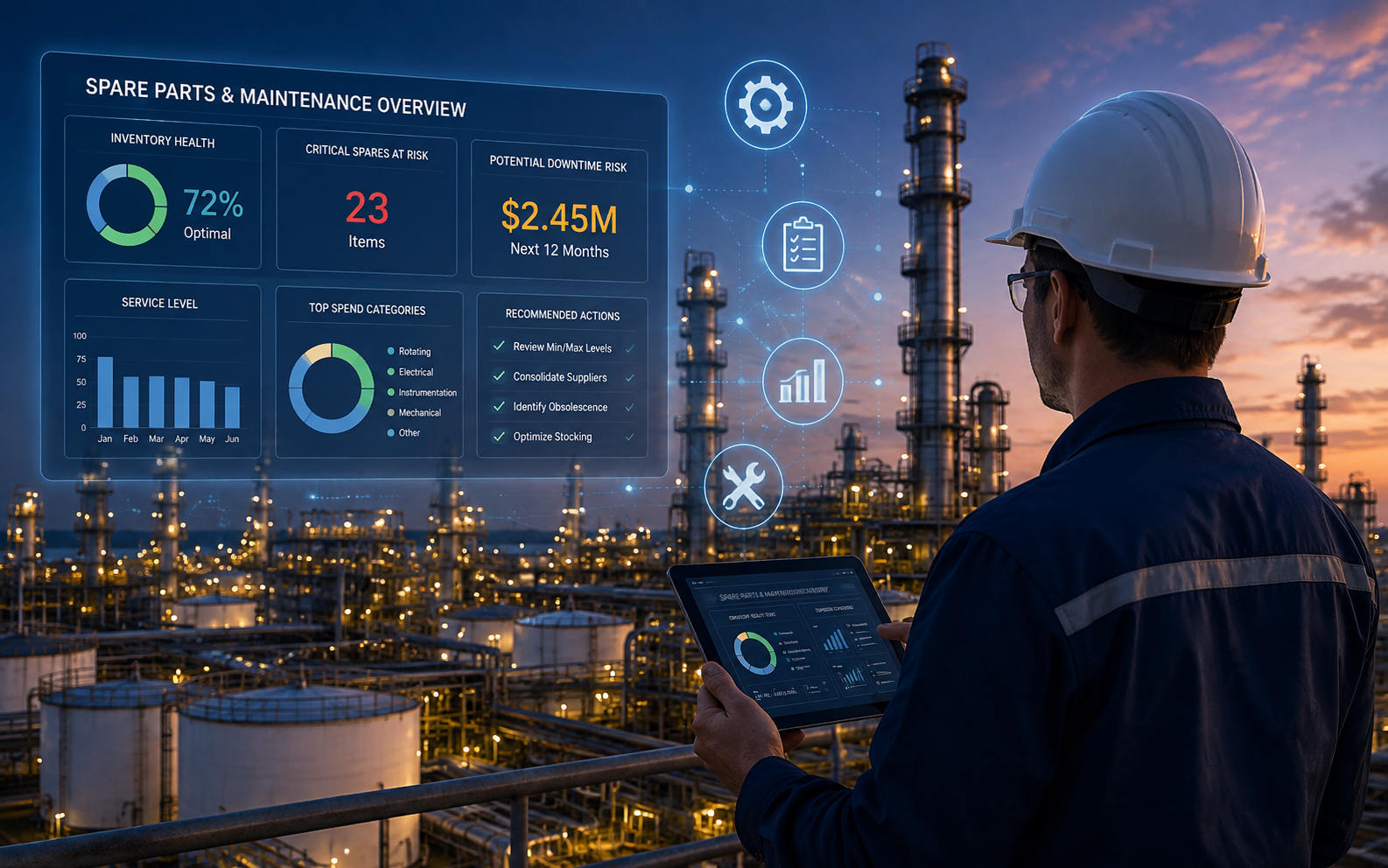

Digital Transformation of Facility Management: Integration of Cafm Systems With Other Technologies

Why is integration key for effective fm? CAFM (Computer-Aided Facility Management) systems are essential for the effective digital management of buildings and technology. They centralize all information—covering assets, processes, and technology—into a clear interface, enabling facility managers to plan maintenance, monitor asset status, manage operational costs, and ensure regulatory compliance.
To achieve higher efficiency, better oversight, and eliminate redundant work, integration with other digital systems is crucial. Modern CAFM is not a standalone tool; it cooperates with diagnostic technologies, IoT, BIM models, and geodetic data. This interconnection significantly reduces operating costs, boosts maintenance effectiveness, and minimizes manual data entry errors.
IOT Monitoring and its role in Predictive Maintenance: Integrating CAFM with IoT sensors enables predictive maintenance based on the actual condition of the equipment, rather than solely on fixed maintenance schedules. Most traditional CAFM systems schedule service based on time intervals, whereas connecting with IoT allows for reaction based on the real utilization of the equipment.

Service actions are thus triggered only after real performance, for example, based on a predefined equipment “cycle,” where a service request is automatically generated after every 1,000 cycles. Another possible use of IoT sensors connected to HVAC systems (heating, ventilation, air conditioning) is the continuous monitoring of their performance. If sensors detect unusual vibrations or a performance drop, the system automatically generates a service request and assigns it to technicians. This prevents unexpected outages and expensive repairs.
Integration of Cafm with BIM: By linking with BIM (Building Information Modeling) models, the CAFM system gains access to detailed information about the construction and technological elements of buildings, which significantly increases the quality of facility management. BIM provides digital models of objects with complete construction documentation, technical elements, and systems, allowing facility managers immediate access to all relevant information.
This integration allows maintenance planning based on actual data rather than estimates and blind adherence to fixed schedules. An air conditioning unit is an example. Thanks to access to the BIM model, the facility manager has an immediate overview of the unit’s location in the building, including the detailed routing of pipes and utility lines across the premises. At the same time, they have access to technical specifications of the equipment, installation drawings, service documentation, warranty records, and previous interventions. They can quickly identify the cause of a malfunction, determine which parts of the building are affected, and effectively coordinate the service intervention.
Integration with Geodetic Systems, Advanced Building Diagnostics, and 3d Scanning: For large buildings and campuses, the integration of CAFM with geodetic data and advanced diagnostics is crucial. Thermographic cameras, 3D scanning, and drone inspections help facility managers gain a detailed overview of the building’s condition and detect problems early.
For buildings with large flat roofs, the integration of CAFM with drones and thermographic cameras helps efficiently detect and resolve leaks. Measurement results are transferred directly to CAFM, where maintenance tasks are automatically generated with the precise location of the problematic areas. Furthermore, the technician can view a 3D model of the roof and see a visualization in a realistic display, enabling precise preparation for the intervention itself.
Energy Management and Operational Cost Optimization: The integration of CAFM, IoT, and energy management enables the effective monitoring and control of energy consumption in buildings. Smart meters continuously monitor the consumption of electricity, water, or gas, which helps facility managers identify savings opportunities and minimize waste.
By linking CAFM, IoT, and energy management, it is possible, for example, in shopping centers, to monitor space occupancy and automatically regulate heating or air conditioning to match the current use of the building. Similarly, in industrial complexes, where the integrated system detects anomalies in electricity consumption, technicians are immediately alerted to potential machine malfunctions or energy leaks.
Management of Lubricants and Oils in Building Technology Systems: In asset management, oils and lubricants are not only used in industrial operations but also in various building technology systems such as elevators, HVAC systems, cogeneration units, and backup diesel generators. The quality of oils in these devices directly affects their operational reliability, lifespan, and efficiency.
Through the connection of the CAFM system with IoT sensors and lubricant/oil management systems, a request for oil testing and its replacement or purification can be automatically generated when defined threshold values are reached. For instance, in cogeneration units in hospitals or shopping centers, the condition of lubricants—which are exposed to high temperatures and contamination—can be monitored and addressed in this way. This prevention avoids unplanned outages and costly repairs.
Systems with Augmented Reality (ar) and Virtual Reality (vr) Technologies: Integrating CAFM systems with Augmented Reality (AR) and Virtual Reality (VR) technologies brings a new dimension to the management of buildings and technology. Augmented reality allows technicians in the field to view layers of hidden infrastructure, such as utility lines, distribution networks, or structural elements, without having to consult technical documentation.
Information is displayed on a mobile device or smart glasses in real space, accelerating orientation and increasing intervention safety. AR also proves useful for accessing manuals, service plans, or visual identification of components in complicated technical areas.
Virtual reality also finds application in staff training. Thanks to realistic simulations, technicians can practice correct procedures, crisis situations, or troubleshooting without physically entering the real environment. This approach is used, for example, in training for maintenance of energized equipment, handling hazardous materials, or simulating building evacuation. Both technologies significantly increase the efficiency of training, occupational safety, and the level of technical preparedness of personnel.
Integration with Access Control and External persons’ Security Technologies: Effective management of access to buildings and technical areas is an important part of modern facility management. The integration of CAFM systems with access control technologies such as turnstiles, attendance systems, document readers, or smart cards allows for monitoring the movement of employees and external personnel within the facility and ensuring that sensitive areas remain secured.
In data centers, for example, a system can be set up to permit entry to technical rooms only to authorized individuals with valid access rights. The movement of external persons, such as suppliers and service technicians, is also a crucial area. An automated system can ensure their pre-registration, verification of entry authorization, provision of safety instructions and training, or generation of a temporary access code. This approach not only increases security but also reduces the administrative burden associated with recording and approving individual entries.
Integration with AI – AI-Powered Cafm: Artificial intelligence (AI) in various forms is taking the lead in optimizing and automating processes – and in CAFM systems will be no exception. However, we should admit that many of the AI applications were not enabled by AI itself and were possible even before the massive hype of AI-powered technologies from recent years. Rather, these use cases get even more powerful with the integration with AI. AI can be made use of in the area of Predictive maintenance, monitoring and managing environmental aspects of buildings, monitoring and analysing the use of space in buildings, AI can create chatbots or virtual assistants for visitors and users of buildings, intelligent chatbots connected with AI-powered Knowledge Base can be utilized to support technicians in the field. These days, AI powered inspection tools are often combined with walking robots like cyber dogs. Also in construction project management robots are being applied to measure the progress of works on the construction site.
The Result is highly Effective Facility Management: The integration of CAFM systems with technologies like IoT, BIM, and advanced diagnostics delivers highly effective facility management, enabling condition-based maintenance, significant cost reduction, and increased operational reliability. With a growing emphasis on process automation, personnel safety, and energy optimization, the digitalization of facility management is a necessity for sustainable building operation. The future lies in smart technologies and data interconnection, providing companies that integrate CAFM systems with a crucial competitive advantage.
About the Author
ING. ONDŘEJ ANTOŠ
ING. ONDŘEJ ANTOŠ is the founder and director of EASY FM s.r.o. He has been working in asset and facility management for over 15 years. His main focus is on process digitalization and asset management automation. He was at the inception of the CAFM/CMMS system SW KLID, which is now used by companies across sectors. He actively lectures at conferences, conducts training, and is a member of professional organizations such as IFMA and the Czech Society for Maintenance.



Subscribe to the free Maintworld newsletter here!