Rethinking Steelmaking: SSAB’s Path Away from Fossil Carbon
The steel industry is at a turning point. Globally responsible for 7–9 per cent of carbon dioxide (CO₂) emissions, steel production has long been associated with high carbon footprints. Companies, including Nordic steel producer SSAB, are aiming to rewrite that story.
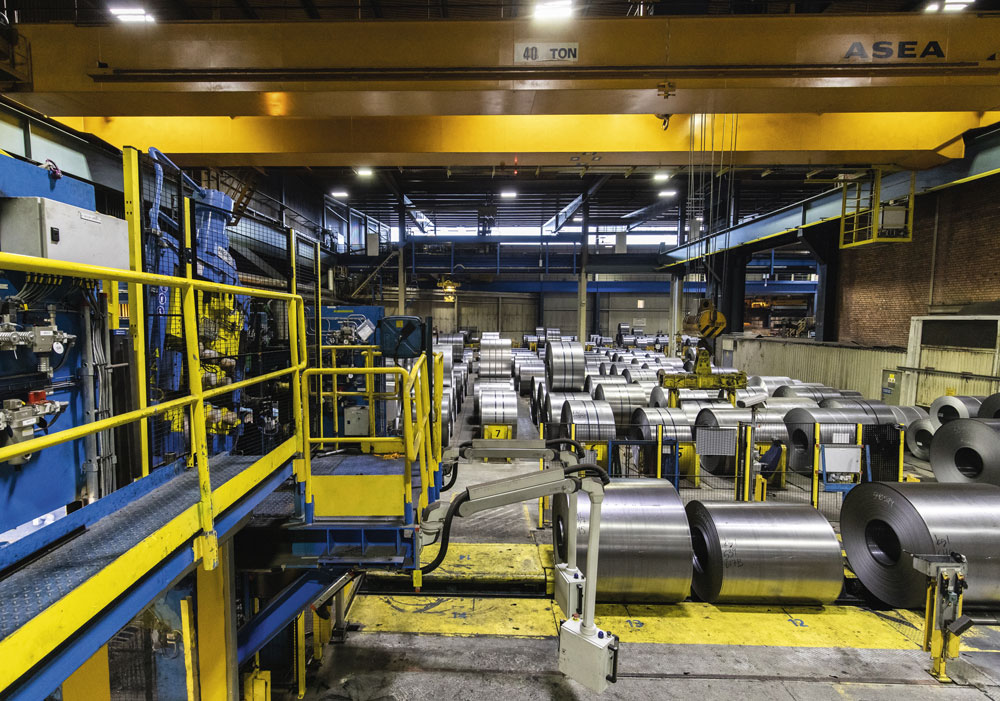
Coils at SSAB in Borlänge, Sweden.
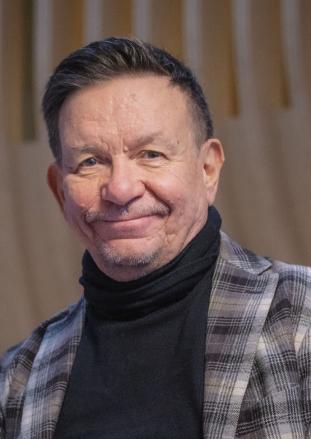
When discussing sustainable steel, Thomas Hörnfeldt is careful with terminology.
“We try to avoid using the term green steel,” Hörnfeldt explains.
“There is no recognised definition—it could mean slightly better than conventional steel, or a revolutionary technology. What we focus on is decarbonised steel, a shift in production technology that drastically reduces CO₂ emissions,” he continues.
The urgency behind a shift toward decarbonised steel is clear. Global steel production is among the world’s largest industrial emitters, accounting for as much as 9 per cent of global greenhouse gas emissions, according to international assessments.
At the same time, global steel consumption has risen sharply and is expected to continue rising. According to the World Steel Association, world crude steel production has nearly tripled since 2000, driven by population growth, rapid urbanisation, and rising living standards across emerging economies.
According to a recent white paper published by the World Steel Association, the traditional blast furnace-basic oxygen furnace (BF–BOF) technology, which accounts for about 70 per cent of global steel production, relies on metallurgical coal and produces on average 2.34 tonnes of CO₂ per tonne of steel.
“This emissions intensity, combined with the sector's scale, makes steel decarbonization essential for achieving global climate targets,” the report states.
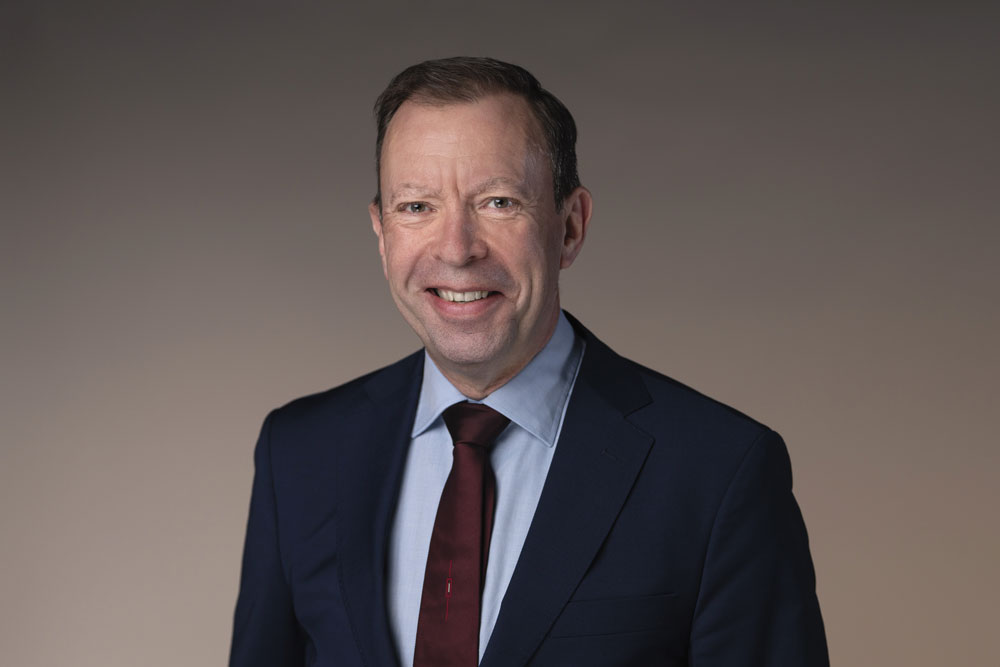
Maintworld spoke with Thomas Hörnfeldt, Vice President Sustainability at SSAB, about decarbonised steel, fossil-free production, and the future of heavy industry.
For SSAB, transitioning away from fossil-based steelmaking is both a climate responsibility and a strategic opportunity.
Hörnfeldt highlights the scale of impact possible in the Nordic region: “At our home turf, we can reduce Sweden’s CO₂ emissions by 10 per cent and Finland’s by 7 per cent. That’s our contribution to the climate challenge.”
Some steelmakers, such as Finland’s Outokumpu, focus on recycling scrap steel. While this reduces emissions, Hörnfeldt, notes that scrap steel is a scarce resource. “The world’s growing steel demand outpaces recycled steel availability. That’s why we also need to use iron ore.”
Traditionally, iron‑based steelmaking generates large amounts of CO₂ because carbon is used to remove oxygen from iron ore. However, SSAB is now working with its iron‑ore supplier LKAB (Luossavaara‑Kiirunavaara AB) and its electricity provider Vattenfall to replace this carbon‑intensive step with a hydrogen‑based process. When hydrogen is used as the reducing agent, the reaction produces water (H₂O) instead of carbon dioxide—eliminating the main source of emissions in conventional steelmaking.
Why Automakers Are Racing Toward Fossil-Free SteelThe transition toward decarbonization of steel production is already underway at SSAB’s Nordic facilities.
The automotive sector is emerging as one of the earliest adopters of low-emission steel, driven by strict sustainability targets and the rapid phase-out of tailpipe emissions.
SSAB’s Thomas Hörnfeldt notes that as vehicles become cleaner in use, the material footprint becomes the next major challenge: “Passenger cars are getting rid of tailpipe emissions as we speak. That means the carbon footprint of a car today is very much related to the materials, where steel is a big part.”
This shift is pushing automakers toward fossil-free steel at a rapid pace. SSAB already collaborates with more than 60 industrial partners, including major automotive brands. “The interest is quite high from that area,” Hörnfeldt says. “Volvo Trucks used our SSAB Zero product in 12,000 trucks last year to reduce their carbon footprint.”
For passenger cars, the impact is equally significant. “Using fossil-free steel can reduce the vehicle’s carbon footprint by roughly 30 per cent,” he explains.
EU policy is reinforcing the trend. Hörnfeldt points out that discussions around allowing combustion engines after 2035 include conditions tied to material emissions.
“There has been a trade-off saying that yes, you may continue to use combustion engines—but then you have to use low-emission steels as part of your car.”
With regulatory pressure rising and major manufacturers (OEMs) committed to reducing their Scope 3 emissions, the automotive industry is becoming a key driver of demand for SSAB’s fossil-free steel.
In Oxelösund, Sweden, one of the company’s key plants is being rebuilt to use recycled steel as a primary raw material. The upgraded plant is scheduled to go live in early 2027, and once operational, it is expected to reduce Sweden’s national CO₂ emissions by approximately 3 per cent.
Following that, the Luleå plant—SSAB’s largest facility in northern Sweden—is slated for an upgrade with a new mini-mill by 2029. This modernisation will further cut emissions, contributing to another 7 per cent reduction at the national level.
“This plant represents the ultimate goal of the company’s decarbonisation strategy: producing steel without generating CO₂ emissions,” explains Hörnfeldt.
The third step planned is for the transformation of Raahe, Finland. The Raahe project timing will depend on SSAB’s financing and execution capacity, raw material availability as well as the learnings from the Luleå project.
Unlike many industries looking to cut emissions through carbon-capture technologies, Hörnfeldt is clear that SSAB has no plans to rely on them. Continuing to import carbon only to capture the resulting CO₂ later, he says, “seems a silly way of doing things.”
In traditional blast-furnace steelmaking, carbon is used to strip oxygen from iron ore — a chemical reaction that inevitably produces CO₂. Carbon capture can trap some of these emissions, but Hörnfeldt argues that it treats the symptom rather than the cause: the process still depends on fossil carbon, and the system remains fundamentally carbon-based.
SSAB is instead moving to hydrogen-based steelmaking powered by clean electricity. This eliminates the need for carbon capture altogether, avoids transporting fossil carbon across the world, and represents a complete redesign of the steelmaking process.
SSAB is not the world’s largest steelmaker, but it is a global leader in high-strength steels.
“In high-strength steels, we hold roughly a third of the world market,” Hörnfeldt says.
“These steels allow customers to use less material while maintaining performance, delivering inherent sustainability benefits.”
The company’s decarbonised steel — marketed as SSAB Zero™ — is already used by well-known partners, including Volvo Group, Toyota Material Handling, and Epiroc. Current production of SSAB Zero amounts to a few hundred thousand tonnes. Upgrades in Oxelösund will expand capacity to more than a million tonnes annually, meeting rising demand in Europe and North America.
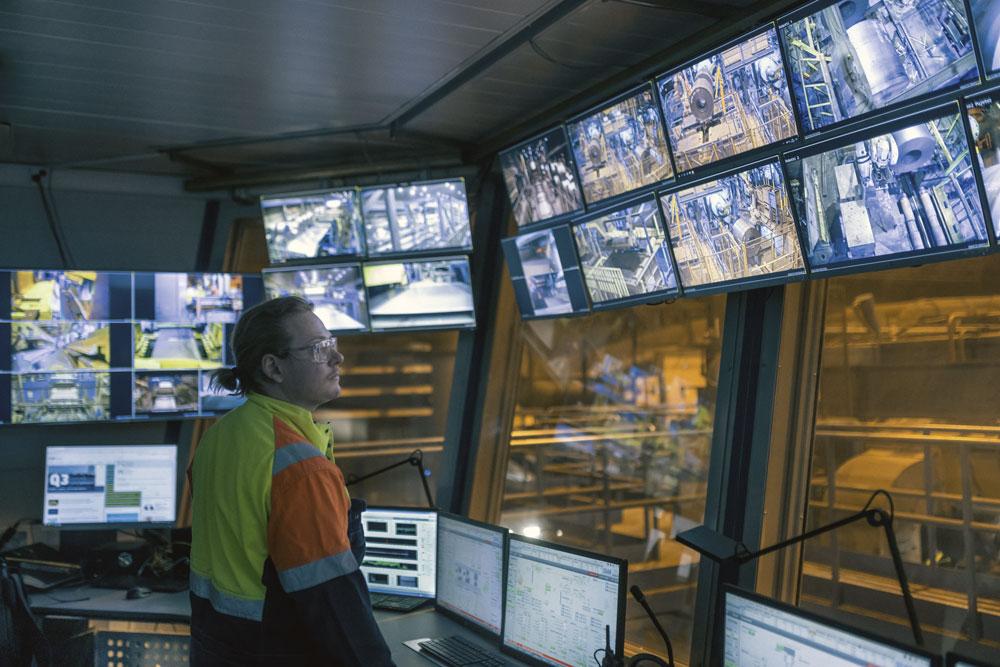
Pickling line control room at SSAB in Hämeenlinna, Finland.
“Our own emissions for SSAB Zero are almost zero,” Hörnfeldt explains. “Across the supply chain, carbon reductions reach 70–80 per cent compared to conventional steel.”
For automotive customers like Volvo, using SSAB Zero can cut a vehicle’s carbon footprint by around 30 per cent. Similar reductions apply to heavy trucks.
SSAB’s long-term ambition is unambiguous.
“We aim to become a mainly fossil-free steel company,” Hörnfeldt says.
He believes that by 2035, rising CO₂ costs will make conventional blast-furnace steel increasingly uncompetitive in Europe.
Automakers and the construction sector are emerging as the earliest adopters of fossil-free steel, driven both by customer expectations and regulatory pressure. EU climate policy is accelerating this shift. The phase-out of combustion-engine car sales after 2035 is pushing manufacturers to cut emissions across the entire value chain, including the materials they use. Under the EU’s 2035 rules, new cars must reduce CO₂ emissions by 90%, with the remaining 10% addressed through low-carbon materials such as fossil-free steel or sustainable fuels.
The message is clear: as regulation tightens and carbon costs rise, demand for low-emission steel is moving from niche to necessity.
“The European Union’s climate framework is tightening rapidly, and the steel sector is one of its primary industries,” Hörnfeldt says.
Measures such as Fit for 55, the strengthened EU Emissions Trading System (ETS), and the phased introduction of the Carbon Border Adjustment Mechanism (CBAM) are designed to reduce industrial emissions and ensure that both EU-produced and imported steel reflect their true carbon cost. As carbon prices rise and free allowances are phased out, traditional blast-furnace steelmaking faces mounting financial and regulatory pressure.
These policies are reshaping market dynamics. Automakers, construction firms, machinery manufacturers, and other industrial customers now face stricter reporting requirements and Scope 3 expectations under EU sustainability rules. As a result, demand is shifting toward low-emission steel — including hydrogen-based and recycled routes — which help downstream industries meet their own decarbonisation targets.
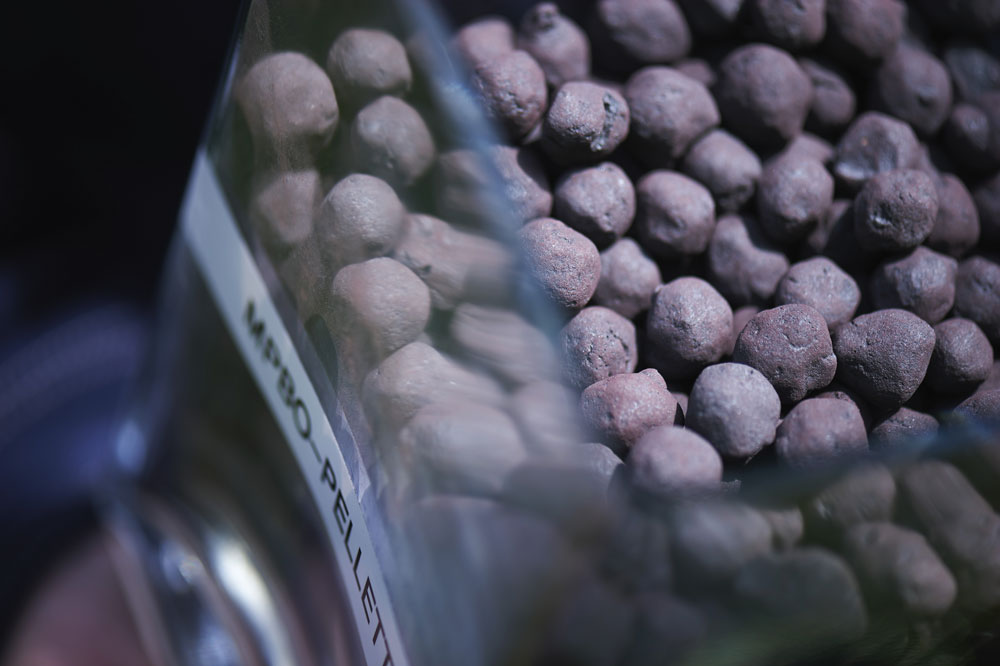
Iron ore pellets.
For SSAB, this regulatory momentum directly supports its strategy. Its two flagship, low-emission products — HYBRIT-based fossil-free steel, produced using hydrogen-based direct reduction, and SSAB Zero, made from recycled scrap using fossil-free electricity — align closely with the EU’s long-term climate objectives. As carbon-intensive steel becomes more costly and less competitive, SSAB’s early investment positions it to benefit from growing demand across Europe.
In this environment, SSAB is not only reducing its own emissions but strengthening its market position. By aligning technological development with evolving EU policy, the company shows that decarbonised steel can be both commercially viable and strategically advantageous as Europe accelerates its transition toward a climate-neutral industry.
Decarbonisation is reshaping far more than SSAB’s emissions profile — it is driving a full operational reset. As production shifts from coal-based blast furnaces to hydrogen- and electricity-driven processes, the physical and digital infrastructure of the steel plant changes with it.
Hörnfeldt notes that the new technology brings a different set of maintenance demands. High-voltage electrical systems, hydrogen pipelines, electrolysers and automated controls require safety routines and technical skills that diverge sharply from those used in traditional coke-based operations.
“Hydrogen introduces its own protocols, from leak detection to ventilation, while electrified processes call for expertise in power electronics and energy-efficient operation”, Hörnfeldt says.
Digitalisation becomes the backbone of this new environment. Next-generation plants will rely on dense sensor networks and real-time monitoring, enabling predictive maintenance that identifies issues before they cause downtime. The result is a more reliable, data-driven and energy-efficient production system — one that supports both climate targets and cost competitiveness.
Hörnfeldt says that this technological shift is mirrored in the workforce. SSAB is retraining employees to operate and maintain next-generation equipment, blending metallurgical know-how with skills in renewable energy systems, process safety and digital analytics. The company sees this as essential preparation for a low-carbon industrial future.
In practice, decarbonisation is modernising steel plants of the future from the ground up. The facilities of tomorrow will be cleaner, quieter and more automated — and the people running them will be equipped with a new blend of skills to match.
In this landscape, digitalisation becomes central.
As one of the first companies to produce fossil-free steel at scale, SSAB is proving that even the most carbon-intensive sectors can change course. “Steel has traditionally been hard to abate,” Hörnfeldt says. “We want to show that it can be done — and must be done — long term. In that sense, our role is both practical and symbolic.”
Europe currently leads the push toward green steel, driven by regulation, customer demand and early investment in hydrogen-based technologies. But the momentum is no longer regional. Hörnfeldt notes that China, the United States and other major steel-producing regions are now pursuing similar pathways, particularly in industries such as electric vehicles, renewable energy and heavy machinery.
“The global trend is unmistakable: reducing steel’s carbon footprint is becoming a priority everywhere,” he says.
SSAB 2025 Profit Tops Expectations as Fossil-Free Steel Momentum Builds
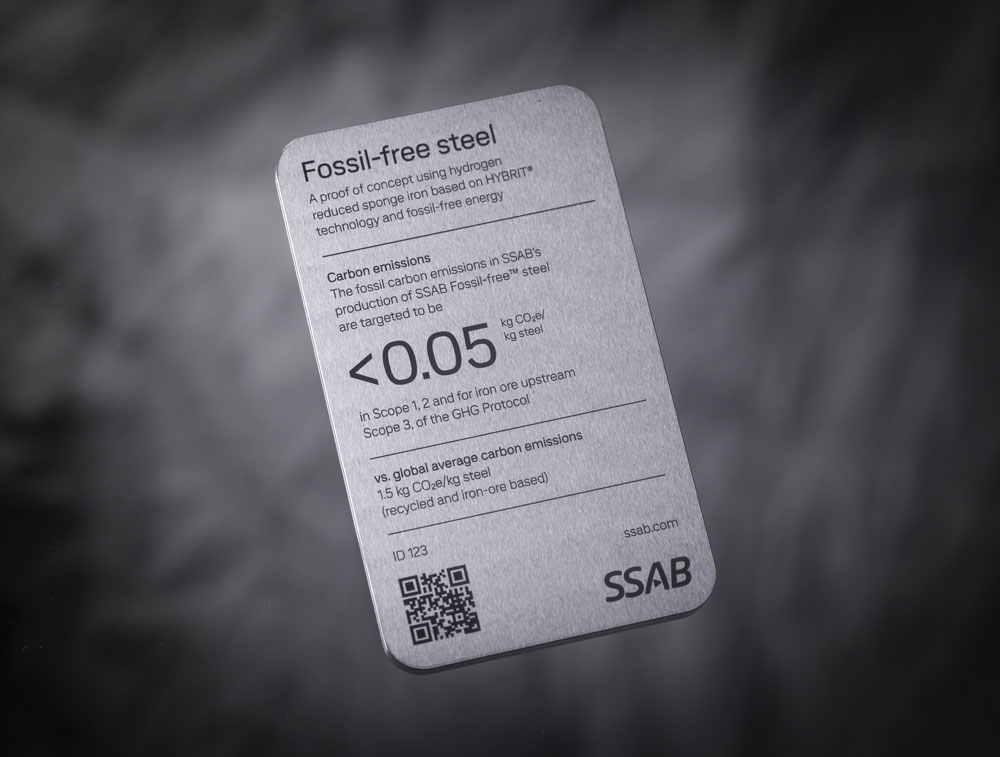
Nordic steelmaker SSAB ended 2025 on a stronger note than analysts anticipated, supported by solid performance in North America and rising interest in the company’s low-emission steel products.
Despite a softer steel market resulting in lower-than-expected revenue growth, profitability improved year-on-year, helped by higher prices in North America and continued growth in premium and special steels.
CEO Johnny Sjöström said in a statement that the company’s strategy is paying off:
“Increasing the share of premium products supported profitability in 2025, even in a weak market.”
Looking ahead, SSAB expects steel deliveries to rise in early 2026 across all divisions, particularly in Special Steels.
SSAB’s financial results came after an interview with Maintworld. Thomas Hörnfeldt, Vice President of Sustainable Business, said that geopolitical uncertainty has not altered the long-term trajectory toward decarbonised steel.
“Large industrial companies have official sustainability objectives, and those targets remain unchanged,” he noted. “Even with global turbulence, the mid- and long-term demand for low-emission steel is intact.”
Automotive and heavy-vehicle manufacturers continue to lead adoption. Volvo Trucks, for example, used SSAB Zero in 12,000 trucks in 2025, significantly reducing supply-chain emissions. Hörnfeldt emphasised the impact: “Using fossil-free steel can reduce the carbon footprint of a vehicle by roughly 30 per cent.”
SSAB’s Nordic transformation program—replacing blast furnaces with electric arc furnaces and preparing for hydrogen-based HYBRIT production—remains on schedule.
“Once fully implemented, the shift is expected to cut Sweden’s national CO₂ emissions by 10 per cent and Finland’s by 7per cent,” Hörnfeldt says.
Despite short-term market fluctuations, Hörnfeldt sees a clear global direction: “Different parts of the world move at different speeds, but the overall trend is the same. Every region is heading toward lower-emission steel.”
Text: NINA GARLO-MELKAS Photos: SSAB Archive