

Paper and Packaging Firms Adopt AI-Driven Discipline to Tackle Overcapacity and Boost Profitability
Paper and packaging companies are increasingly adopting a more disciplined, AI-powered approach to manage overcapacity, transform maintenance and unlock commercial excellence.
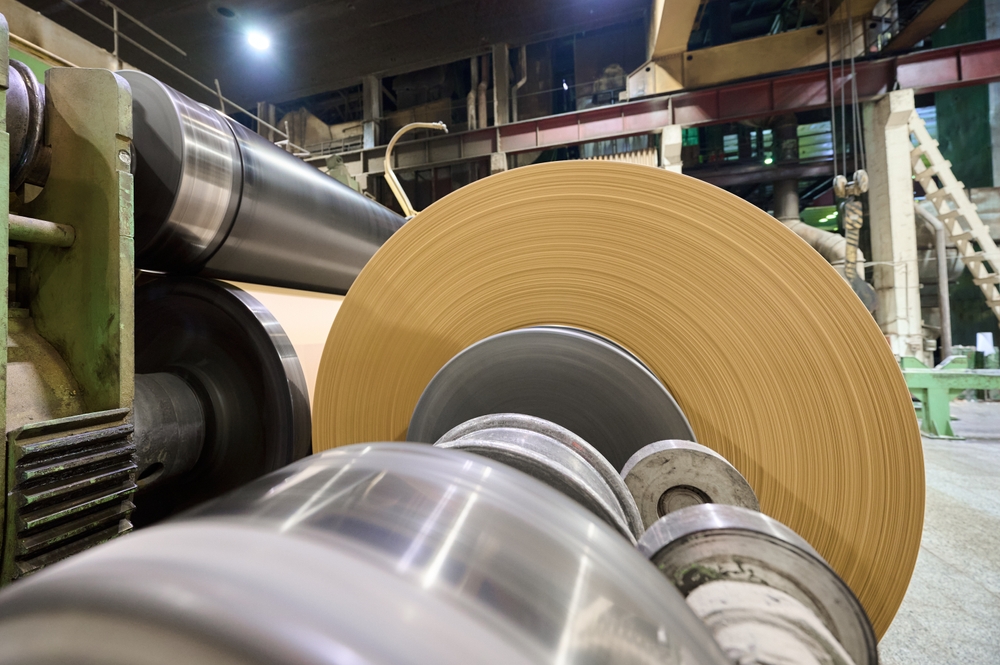
Photo: Shutterstock
Bain & Company today released new research showing how companies in the sector are responding to a challenging operating environment marked by structural overcapacity, volatile input costs and soft demand across multiple end markets.
Overcapacity remains a chronic challenge for industrial producers
Executives often overinvest, assuming future growth that fails to materialise, while underestimating the long-term cost of persistent oversupply. Bain’s analysis shows that most companies aim to grow profits at four times the market rate, yet only 7% of industrial companies achieve this goal—highlighting how excess capacity can significantly erode margins.
The research finds that overcapacity is structural rather than temporary, and that companies must understand their true relative cash cost per tonne versus competitors—grade by grade and mill by mill—to make effective decisions.
“The industry is operating in a structurally oversupplied environment, and companies that rely on past demand assumptions will continue to face pressure,” said Ilkka Leppävuori, leader of Bain & Company’s global Packaging subsector.
“Leaders are taking a more rigorous view of cost position, portfolio choices and capacity decisions to stay competitive in a market that is unlikely to rebalance quickly.”
To address overcapacity, leading companies are allocating more volume to their most profitable customers, products and geographies. They are also considering M&A to expand network coverage and improve asset efficiency, while taking a site-by-site approach to evaluating closures and conversions, factoring in system-wide implications.
AI-enabled maintenance emerges as a powerful lever
Bain’s research shows that AI is making maintenance both predictive and prescriptive, reducing failures, downtime and labour costs. Increasing tool-in-hand time by 15 percentage points and reducing maintenance costs per tonne by 17–23% are among the most significant opportunities identified.
The research outlines three pillars of smart maintenance—asset strategy, work productivity and spare-parts optimisation—supported by a four-stage transformation journey: diagnostic, development, ramp-up and scaling. Spare-parts optimisation alone can cut inventory requirements by 20–40%, freeing up working capital and lowering cost per tonne in capital-intensive environments.
As solutions scale and costs decline, maintenance optimisation offers high returns and is becoming a top priority for many paper and packaging executives.
Commercial discipline underpins profitability
Many companies still lack a clear understanding of which customers, SKUs or channels truly generate profits. Granular economic margin analysis often reveals significant leakage in pricing, discounting and cost-to-serve.
Bain’s research indicates that commercial excellence can deliver two to three times profit growth by reshaping pricing architecture, eliminating unjustified discounts, tightening contract renewals and focusing sales efforts on the most attractive profit pools.
AI-powered tools, including web scraping and geospatial analytics, are increasingly used to identify new demand clusters and growth pockets—capabilities that are becoming critical as customer consolidation intensifies competitive pressure.
Text: Vaula Aunola