Silje Langhelle was Elected as Chair of the Swedish Maintenance Association on January 20, 2026.
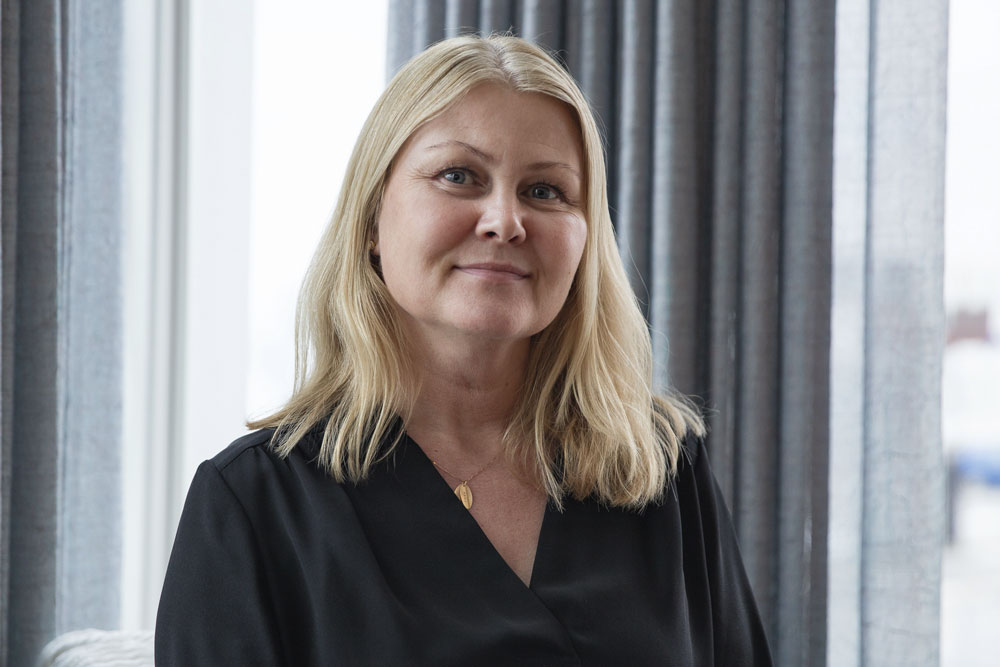
Along with our congratulations, we wanted to ask the new Chair for her views on the future of the association.
On LinkedIn, you mention that you see this role as an opportunity to further strengthen the organization with a strong brand. What new developments or initiatives can we expect?
The Swedish Maintenance Association already has a strong reputation as a trusted platform for knowledge sharing and networking. My ambition is therefore not to change its foundation, but to further strengthen its relevance in a rapidly evolving industrial landscape.

Going forward, we can expect an increased focus on strategic visibility of maintenance as a key enabler of industrial competitiveness, sustainability, and resilience. I also see opportunities to further develop collaboration between industry, academia, and technology providers, as well as to enhance the association’s role as a voice for the profession both nationally and internationally.
How do you assess the Swedish Maintenance Association’s impact so far on the maintenance profession within industry, and what do you see as the key factors for ensuring that the association continues to deliver value to its members?
The association has played a very important role for more than 50 years in bringing together stakeholders across the maintenance ecosystem. It has contributed significantly to professionalizing maintenance, promoting best practices, and building networks across industries.
Looking ahead, the key to continued relevance lies in staying closely connected to members’ real challenges. This means focusing on competence development, supporting knowledge exchange, and ensuring that the association addresses both technological shifts and broader business drivers such as productivity, sustainability, and asset lifecycle performance.
In your view, where is maintenance heading – and what will most significantly transform our profession in the coming years?
Maintenance is moving from being a reactive support function toward becoming a strategic discipline that directly influences business performance.
Several trends will be particularly transformative: digitalization and data-driven decision making, predictive and condition-based maintenance, increasing automation, and stronger integration between maintenance, production, and sustainability strategies. At the same time, human competence will remain critical – technology will support professionals, not replace them.
How is Sweden responding to these changes, and what does this mean in practice for the association’s activities?
Sweden has a strong industrial tradition and is generally quick to adopt new technologies and working methods. Many Swedish companies are already advanced in areas such as reliability engineering, digital maintenance tools, and asset management.
For the association, this means continuing to act as a bridge between knowledge and practice – facilitating learning, sharing experiences, and helping members navigate the transition toward more predictive, data-driven, and sustainable maintenance strategies.
What do you see as the most important task for the Swedish Maintenance Association right now, and how do you plan to advance this as Chair?
The most important task right now is to further strengthen the visibility and recognition of maintenance as a strategic function within industry and society.
As Chair, I aim to support this by ensuring a clear strategic direction for the association, fostering strong collaboration with members, and promoting the importance of maintenance in public and industrial discussions. My role is primarily to enable the board and the organization to work effectively together toward these shared goals.
How can the association better support both large industrial companies and SMEs – and how can we attract more young professionals to become involved?
Large companies and SMEs often share the same challenges, but have different resources. The association can support both by offering accessible knowledge platforms, practical tools, and networking opportunities that address real operational needs.
Attracting young professionals is also essential. This requires making the profession more visible, highlighting its technological and societal importance, and strengthening collaboration with universities and educational institutions. Maintenance today is about innovation, sustainability, and digital transformation – this is a story we must communicate more clearly to the next generation.
Background information

Education:
I have studied International Shipping in Oslo,
a shipbroker’s programme.
Chair of the Swedish Maintenance
Association:
Chair since January 20, 2026.
Current role and career summary:
I am currently VP Sales & Marketing at Easy-Laser AB, a global technology company specializing in precision measurement and alignment systems for industrial reliability. In this role, I lead an international organization and work closely with customers, distributors, and partners in more than 80 countries.
Key milestones or highlights:
My career has been centered on the intersection of technology, business performance, and people. Highlights include leading
global commercial organizations, contributing to the transition toward precision-driven maintenance strategies, and engaging
in international industry collaboration and board work. My career strengths lie in professional experience within industrial
technology and global sales leadership.
Compiled: Jari Kostiainen Photo: Silje Langhelle Archive



Subscribe to the free Maintworld newsletter here!
Latest