From Prediction to Decision
Maintenance is entering a new phase. Not because of louder buzzwords, but because the logic underneath is changing. Kai Goebel has watched Prognostics and Health Management grow from statistical guesswork into data driven intelligence. Now he argues that the real transformation is only beginning.
Kai Goebel has watched Prognostics and Health Management grow from statistical guesswork into data driven intelligence.
For more than three decades, Kai Goebel has worked at the forefront of Prognostics and Health Management (PHM). Known for his senior scientific leadership at NASA Ames Research Center, he helped move health management technologies from research labs into safety critical aerospace systems and later into broader industrial use. When he looks back at the early days of PHM, the contrast is striking.

From averages to individual asset health: “In the beginning, prognostics meant statistics,” he explains. “You took the average lifespan of an asset, subtracted how long it had been in use, and that was your estimate. It was a numbers game based on asset populations, not individuals.”
The shift came with Condition-Based Maintenance. Instead of relying on statistical averages, companies began asking a more precise question: what is the actual health of this specific asset, under these specific operating conditions? Sensors, physics-based modeling, and data science opened the door to understanding degradation mechanisms and early failure indicators.
From there, PHM evolved rapidly. Neural networks entered the scene in the 1990s. Today, large language models and advanced analytics tools add new layers of interpretation. So, Artificial Intelligence, in one form or another, has been part of PHM for decades.
“We have made great progress in prognostics,” he says. “But less progress in “M” of PHM, the management part.”
“The idea that AI suddenly appeared in maintenance is misleading,” Goebel says. “We have been using it for decades. What has changed is visibility and accessibility.”
The missing link: For all the technical progress, one part of PHM has not advanced as quickly as he had hoped.
“We have made great progress in prognostics,” he says. “But less progress in “M” of PHM, the management part.”
Predicting failure is only the first step. The real value lies in turning that prediction into action. If an asset is likely to fail in three weeks, what should be done? Should the load be reduced? Should maintenance be scheduled earlier? Is the spare part available? How does the decision affect production targets and overall risk?
These questions create a multi objective optimization problem. Maintenance timing, logistics, asset availability, and risk all interact. According to Goebel, this integration into real operations has been slower than expected. Academic research often focuses on developing new algorithms, while the less visible work of connecting predictions to enterprise systems receives less attention.
“The integration is not glamorous,” he says. “It involves software plumbing, decision logic, and understanding what operators actually need.”
What autonomy really means: Autonomy is another area where expectations and reality must be carefully aligned. When people speak about autonomous maintenance, they often imagine systems that make decisions entirely on their own. Goebel prefers a more grounded view.
Autonomy can mean algorithms that automatically flag anomalies.
It can mean drones performing inspections of tall stacks or remote assets. It can also mean operational adjustments, such as reducing load to extend asset life in highly automated plants.
But full autonomy without human oversight remains unlikely, especially in high-risk environments. Aerospace has long operated with advanced automation, yet pilots remain in the cockpit. The same logic applies to industrial settings.
“The human will not disappear,” Goebel says. “But the scope of responsibility will expand.”
Instead of monitoring a single boiler or machine, engineers may oversee entire systems supported by intelligent dashboards and predictive models. This changes the skill profile. “Traditional maintenance expertise remains essential. The ability to hear a subtle change in vibration cannot be fully replaced,” Goebel explains.
Learning to work with uncertainty:At the same time, maintenance professionals must become comfortable interpreting probabilistic information. PHM does not deliver certainty. It delivers likelihoods, distributions, and risk estimates.
Goebel recalls presenting engineers with a full probability distribution for time to failure. The response was clear. They did not want a distribution. They wanted a single actionable number, ideally at the 99th percentile.
The episode revealed a deeper issue. Advanced analytics can generate rich information, but if users are not trained to interpret uncertainty, much of that value is lost. Education must therefore evolve alongside technology.
“There is a tendency to trust machine generated data too much,” Goebel notes. “But no information is ever 100 % certain.”
Understanding how models are built, where they may fail, and how to act under uncertainty will be central competencies. For managers, the data load will only increase. For technicians, combining hands on skill with data interpretation will define excellence.
The next five to ten years: Looking ahead, Goebel expects structural change rather than incremental improvement. AI assisted planners will help coordinate maintenance activities. Enterprise level health dashboards will connect asset status with risk management. Autonomous inspections will become routine. Digital twins will operate in near real time. Supply chains will increasingly anticipate demand instead of reacting to breakdowns.
In this emerging paradigm, failure will be treated less as a surprise and more as a managed risk variable. Maintenance will shift from deterministic rules and fixed intervals to probabilistic, risk informed decision cycles.
“We are redefining the epistemology of maintenance,” Goebel says. “It is no longer about fixed thresholds and binary states. It is about dynamic uncertainty distributions.”
Advice for maintenance leaders: For maintenance leaders, his advice is both encouraging and cautionary. The opportunity to use data more effectively has never been greater. But there is no universal solution. Each plant has its own operating context, asset base, and constraints. Algorithms, sensors, and implementation strategies must be tailored accordingly.
“Be open minded,” he advises. “Adopt modern technologies but be mindful. Do not fall for buzzwords. Make sure the solution fits your plant.”
Standing between physics and algorithms, between operators and enterprise systems, Kai Goebel sees a field that is not simply improving but fundamentally transforming. Prediction alone is no longer enough. The future of maintenance lies in turning insight into intelligent, risk-aware decisions.
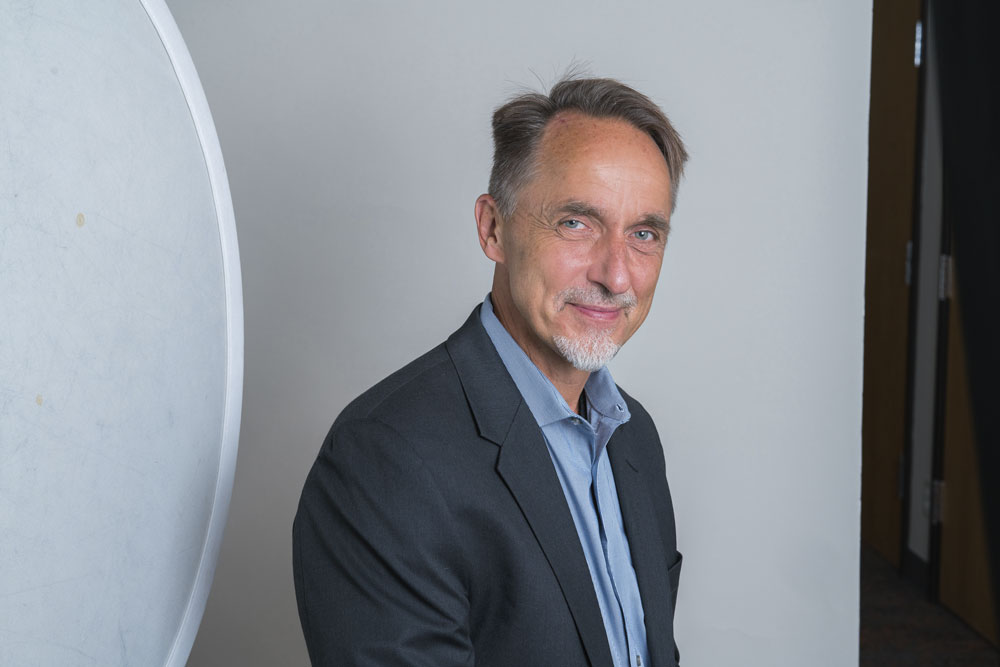
Kai Goebel
Kai Goebel is a globally recognized expert in Prognostics and Health Management, known for his leadership in advancing systems of health technologies across aerospace and industrial domains. He is President of Fragum Global, a company specializing in Resilience of Industrial Systems. He was the Director of the Intelligent Systems Lab at SRI and Xerox PARC and prior to that Branch Chief at NASA Ames Research Center, where he led research in diagnostics, prognostics, health management, decision making under uncertainty, and autonomous systems. He also founded and directed NASA’s Prognostics Center of Excellence, which has played a significant role in developing benchmark data sets and advancing predictive health research.
Goebel holds advanced degrees in engineering, including a Ph.D. in mechanical engineering from the University of California at Berkeley, following his Diplom Ingenieur degree in Germany. Before joining NASA, he worked for a decade as a senior research scientist at General Electric Corporate Research and Development, focusing on artificial intelligence, real time monitoring, diagnostics, and prognostics.
His work bridges physics-based modeling and data driven approaches, with a consistent emphasis on practical industrial value. He has published extensively, holds numerous patents, and has contributed significantly to shaping the global PHM community through research, collaboration, and professional leadership. In addition to his research roles, he serves as an adjunct professor and has been active in editorial and professional societies related to intelligent systems and health management.
Profile sources:
NASA Prognostics Center of Excellence, member profile
IEEE Computational Intelligence Society, Kai Goebel profile
Publicly available biographical information from NASA Ames Research Center
Text: Mia Heiskanen
Photos: Kai Goebel archive



Subscribe to the free Maintworld newsletter here!

Latest